
Popsixle Guide: How to Build a Compliant Landing Page
This guide explains how to build a landing page that remains compliant with Meta’s advertising policies—especially for brands in regulated categories such as supplements, wellness, hemp, cannabis or THC products, beauty, and performance products.
A compliant landing page protects your ad account, prevents disapprovals, and ensures Popsixle can send clean server-side data without triggering algorithmic blocks or domain restrictions.
This article covers:
What “compliant content” means
Specific language to use or avoid
Layout, design, and structural requirements
Tracking and pixel/CAPI setup that must be followed
Common mistakes that lead to policy flags
Best-practice templates you can follow
Disclaimer: This content is for informational purposes only and should not be considered legal advice. For guidance on regulatory or legal matters, please consult a qualified legal professional.
1️⃣Why Landing Page Content Compliance Matters
Meta evaluates not only your ads—but also your landing page—before allowing your ads to run. Even if your ad is safe, your landing page can trigger:
Immediate ad rejection
Lower delivery or limited targeting
Conversion tracking blocks
Domain quality flags
Ad account or Business Manager penalties
For restricted brands, the home page or main site contents are often a cause of reduced performance or blocked conversions. Popsixle helps maintain compliance on the data side, but the landing page must pass Meta’s quality and safety checks.
2️⃣Core Principles of a Compliant Landing Page — Landing Page & Destination URL Standards
The "Ad-to-Landing-Page" experience must be consistent, truthful, and transparent. Meta treats the landing page as an extension of the ad. If the landing page contains prohibited claims, aggressive "Before/Afters," or deceptive tactics, the ad will be rejected.
Copywriting & Claims
☑️Allowed examples
Supportive Language: Focus on how the product helps, supports, or assists the body's natural functions.
Safe: "Designed to support metabolic health," "Helps maintain clear skin."
Subjective Testimonials: Ensure testimonials sound realistic. If a customer claims a "miracle cure," do not feature that quote prominently without heavy disclaimers.
“Supports overall wellness”
“Helps you feel your best”
“Formulated to support a balanced lifestyle”
“Made with natural ingredients”
“Customers report feeling more energized”
✖️Not allowed
Time-Bound Promises: strictly avoid claiming specific results in a specific timeframe.
Violation: "Lose 10lbs in 2 weeks" or "Cure your acne overnight."
Absolute Cures: Do not claim to cure incurable or chronic medical conditions.
Violation: "The ultimate cure for diabetes," "Eliminates chronic pain forever."
False Scarcity: Do not use fake countdown timers or claims that inventory is "running out" if it is untrue. Meta flags this as Deceptive Practices.
Guaranteeing Results: Avoid language that implies a 100% success rate for everyone.
Violation: "Guaranteed to work for every body type."
Meta flags pages that imply medical outcomes—even without stating a disease name.
Visual Content on Landing Page
While landing pages have slightly more flexibility than ad images, they must still avoid "Shock and Scare" tactics.
☑️Allowed examples
Lifestyle imagery
Product packaging shots
People doing normal daily activities
Soft, friendly imagery without medical connotations
✖️Not allowed
Before/after transformations
Clinical, medical, or laboratory imagery
Images showing severe physical change
Anatomical diagrams
Illustrations showing “toxins,” “diseased organs,” or “healing processes”
Meta’s systems often detect these as “misleading health claims.”
Mandatory Footer Links
Every landing page linked to an ad must include functioning links to:
Privacy Policy: Clearly accessible.
Terms of Service / Terms & Conditions.
Contact Us: A real email address or physical address (not just a contact form).
Health Disclaimer: Standard boilerplate text stating the product is not intended to diagnose, treat, cure, or prevent any disease.
Example: "These statements have not been evaluated by the Food and Drug Administration. This product is not intended to diagnose, treat, cure, or prevent any disease."
User Experience (UX)
No Disruptive Pop-ups: Avoid immediate pop-ups that block the user from reading the content. Exit-intent pop-ups are generally acceptable; immediate full-screen overlays are not.
Clear Pricing: The price and subscription terms (if applicable) must be clearly visible before checkout. Hidden subscription fees will trigger a ban.
Match the Ad: The product shown in the ad must be the first thing the user sees on the page. Do not redirect users to a generic catalog or a different product.
3️⃣Ad Creative Standards: Product Packaging/Image Visual Content
Ad creatives must focus on the product, ingredients, or a healthy lifestyle. They must never imply that the viewer has a physical deficiency, health condition, or requires the product to be socially acceptable.
All static images, video thumbnails, and carousel cards must adhere to the following standards.
Visual Content Guidelines
☑️Allowed examples
Product-Centric Shots: High-quality studio photography of the bottle, jar, or packaging on a clean background.
Ingredient Spotlights: Visuals featuring raw ingredients (e.g., fresh fruit, herbs, minerals) alongside the product to imply natural quality.
Positive Lifestyle: Models engaged in general wellness activities (e.g., yoga, hiking, drinking water) appearing healthy and happy.
Note: Models should represent realistic body types and diverse demographics.
Texture & Usage: Close-ups of the product texture (cream swipes, powder scoops) or a generic hand holding the product.
✖️Not allowed
Before & After Comparisons: Strictly banned. This includes side-by-side photos, split screens, or any visual progression showing weight loss, muscle gain, or skin repair.
Body Zoom-Ins: No close-up shots of specific body parts that highlight "problem areas" (e.g., zoomed-in abs, cellulite, acne, wrinkles, or excess fat).
Measurement Visuals: Images implying weight measurement or body sizing are prohibited.
Examples: Tape measures around waists, people standing on scales, or wearing "oversized" pants to show weight loss.
Negative Emotional States: Do not depict subjects looking sad, anxious, or frustrated while examining their appearance or looking in a mirror.
Medical & Anatomical Diagrams: Avoid graphic depictions of internal organs, diseases, or "fat melting" visualizations, which are often flagged as sensationalist.
Product Packaging & Labeling
☑️Allowed examples
Personal Attributes: Ensure visible packaging text does not presume the user’s condition.
Violating: "For Your Acne," "Fix Your Gut."
Compliant: "Acne Support," "Gut Health Formula."
Redacted Labels: If your retail packaging contains non-compliant medical claims, use a digital render of the bottle with simplified text for the ad creative, or photograph the bottle from an angle where the specific claim is not legible.
✖️Not allowed
Avoid "Cure" Claims: Visible labels must not claim to diagnose, cure, treat, or prevent specific diseases (e.g., "Cures Insomnia," "Anxiety Relief," "Diabetes Prevention").
Content Examples (images)
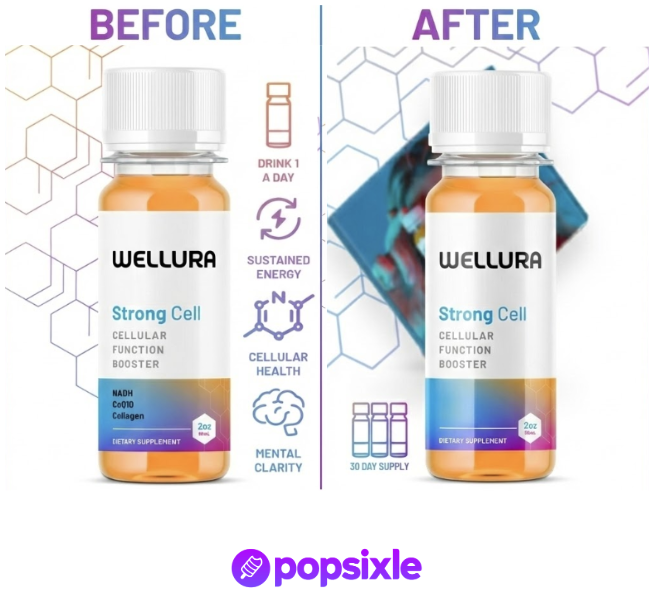
4️⃣Landing Page Structure: A Recommended Layout
While no layout can guarantee approval every time, this structure has consistently met Meta’s standards. It offers a clear, compliant framework you can rely on, while still leaving room for creative adjustments.
Key Objective: Use this layout to establish trust immediately and avoid the "aggressive sales page" triggers that often flag the algorithms.
Below is a layout that has reliably passed Meta’s review process:
Section A - Header
Meta's system checks for signs of a legitimate business. A functioning header prevents the page from looking like a disposable "spam" site.
Logo: Clearly visible branding.
Navigation: Simple navigation/action (Home / Shop now / Contact)
Why: This proves to the system that the site is navigable and not a single-page "trap."
Section B - Hero Section
This is the area "above the fold" and is scrutinized most heavily.
Product image visual: High-quality product image (consistent with the ad image and follows guidelines).
Soft headline: e.g., “Wellness support made simple”
Recommended: "Wellness support made simple."
Avoid: "Cure your [Condition] in 24 hours."
Call-to-Action (CTA): Clear button (e.g., "Shop Now" or "Learn More").
Section C - Benefits (non-medical)
Focus on quality, tone safe ingredients, and lifestyle support rather than treating diseases or altering body structure.
Benefit 1: "Supports daily wellness" (Functional support).
Benefit 2: "Crafted with high-quality ingredients" (Quality focus).
Benefit 3: "Designed for your everyday routine" (Lifestyle focus).
Section D - Footer
A missing footer is one of the most common reasons for rejection. These links must work.
Contact Information: Physical address or active email.
Terms & Conditions
Privacy Policy
Refund Policy
Content Examples (images)
4️⃣Tracking & Domain Compliance Requirements
Always host on a clean domain
For restricted brands, landing pages should be hosted on a fresh domain orto avoid contamination from:
Old non-compliant content
Product pages mentioning restricted categories
Past Meta flags
Popsixle highly recommends dedicated compliant domains. Don’t reuse any sub-domains of your main site—the whole root is scanned.
Install a brand-new Meta Pixel
Using your old pixel can resurface past policy flags. Meta pixels carry historical data. If your old pixel was tied to flagged ads, restricted terms, or rejected campaigns, those associations can resurface and trigger compliance reviews again.
Why a brand‑new pixel?
A new pixel has no history, so Meta evaluates it only on current activity. It also keeps regulated campaigns segregated, reducing the chance of cross‑contamination.
You must ensure:
No other pixels or CAPI connections are installed on the landing page
No Shopify plugin, theme script, or external app duplicates events
No conflicting GTM scripts
5️⃣Common Causes of Meta Policy Flags
hese are the frequent reasons Meta flags or disables landing pages:
High-Risk Elements
“Cure,” “heal,” “fix,” “repair,” “reverse”
Testimonials making medical claims
Before-after transformation images
Excessive “scientific” positioning or medical diagrams
Overly aggressive urgency (“Buy now before symptoms worsen!”)
Mixing non-compliant product categories on the same domain.
Technical Triggers
Duplicate pixels
Conflicting browser + server events
Missing privacy or return policy pages
Meta not recognizing the domain as verified
Visual Triggers
Photos implying bodily change
Lab coats, doctors, medical equipment
X-ray style graphics
Skin transformation imagery
🗒️Pre-Launch Audit Checklist
Creative Assets
[ ] No Comparative Visuals: Are there any "before" and "after" elements?
[ ] Full Body Crop: Is the model shown in a wider shot rather than a zoomed-in body part?
[ ] Text Check: Does the text visible on the packaging avoid words like cure, treat, fix, or prevent?
[ ] Emotional Tone: Is the visual tone positive and aspirational rather than fear-based?
Landing Page
[ ] Consistency Check: Does the headline on the page match the promise made in the ad?
[ ] Disclaimer Check: Is the FDA/Health disclaimer visible in the footer?
[ ] Scarcity Check: Have we removed any fake countdown timers?
[ ] Claim Check: Have we removed absolute promises (e.g., "Cures within 7 days")?
[ ] Link Check: Do the Privacy Policy and Contact links work?
See more additional Popsixle resources
Contact Us
Have questions or concerns? Reach out to the Popsixle via email or through the live chat on our site and a member of our team will get back to you within one business day.